Exposed!
The pros and cons of being vulnerable online
Hi Cringers,
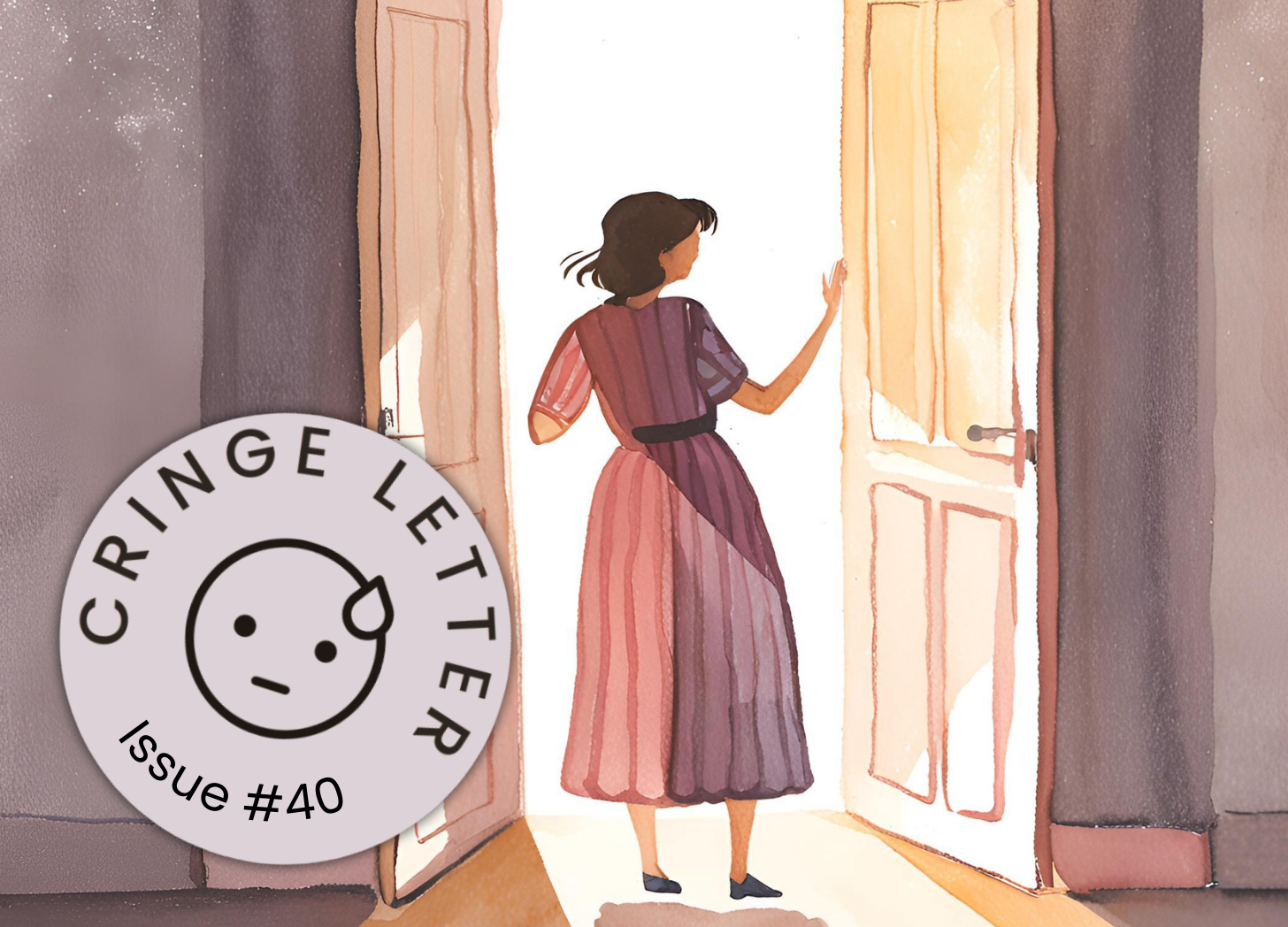
There’s a lot of pressure to "be vulnerable" online and approach social channels as confessionals for leads and likes.
Who remembers the trend of CEOs crying on LinkedIn after conducting mass layoffs?
Some share to an uncomfortable degree and later regret it, while others share nothing and wonder why they can't make real connections.
Vulnerability means different things to different people, but for me, it means a willingness to be seen.
When I first started writing publicly, every sentence felt vulnerable.
It wasn’t so much about what I was saying, but that I was saying anything at all after living so many years in more of a reactive state, the quiet listener waiting for others to speak, responding to what others asserted.
To say something, take a stance, and state my ideas and beliefs publicly means to take the risk of being scrutinized and judged, which can feel scary especially these days.
Putting yourself out there can even result in what I've come to think of as a "vulnerability hangover."
Creating for all to see can be exhausting. Writing, publishing, getting feedback (or not getting feedback), being misinterpreted, and/or misunderstood, can all take it out of you after a while.
So, why do it? Why bother?
Because I believe putting yourself out there honestly is the fastest way to build real relationships and fulfill that need we all have to be seen and understood.
For a while now I’ve been hearing about the “loneliness epidemic.”
This article from the Harvard Graduate School of Education suggests technology, insufficient time with family, work, mental health challenges, individualistic American society, and/or a lack of spiritual life could be to blame.
But what if the real issue isn’t the lack of access to others, but how we connect in the first place?
Could this trend towards vulnerability online be pointing to a deeper need we all have to connect beyond the surface?
We speak about the weather, what we’re doing, and what we’ve achieved, but how often do we really share about our inner lives? Our real experiences, without the sugarcoat?
What if the reason vulnerability gets likes in the first place is because we’re so starved for it in our day-to-day lives?
If you choose to share, what you choose to share, and how you choose to share is up to you and you should never feel like you owe anyone anything.
You make the rules.
Just be sure to share thoughtfully and to take some time to think through what you do and don’t want to say. It may help to ask yourself the following questions before posting:
- Why are you sharing? What is your goal?
- Have you let the draft sit for at least 24 hours?
- Have you fully processed what you're about to share?
- Have you kept the details vague enough to avoid security threats?
- What are the potential risks to your personal life and/or business if you share this?
You don't need to spill it all to connect with others, but a little openness can go a long way for those looking to attract more genuine connections.
It's time we redefine vulnerability online to be less about shock value and more about honesty and real connection.
What’s your take on being vulnerable online? Reply to this post and let me know!
Do you want help communicating your story? Here are ways we can work together:
🟡 Book a Clarity Call. I can help you figure out your next steps.🟡 Book a LinkedIn Profile Optimization or Full Rebrand.🟡 Hire me to ghostwrite for you or explore other ways we can work together
Not there yet? Follow me on LinkedIn for free daily insights on writing, branding, and developing your voice.